
The numbers and who states them
| Number | Value | Who states it |
|---|---|---|
| Exit altitude | Up to 13,000 ft | Skydive Dubai |
| Exit altitude in metres | ≈ 3,962 m | Our conversion; partners round to 4,000 m |
| Freefall speed | 193 km/h; "approximately 200 km/h" | Skydive Dubai (both figures appear on its site) |
| Freefall time | 60 seconds | Headout listing; Skydive Dubai publishes none |
| Freefall time, tandems in general | 30–60 seconds | USPA |
| Parachute opening | About 6,000 ft | Headout listing (Desert) |
| Minimum opening height, tandem | 5,000 ft above ground | GCAA report on the club's procedures |
| Canopy ride | Up to 5 minutes | Headout listing (Desert) |
| Climb to altitude | About 20 minutes | Headout listing (Desert) |
| Time on site | 3–4 hours from check-in | Skydive Dubai |
Two details matter when you read these. First, the operator always writes "up to" 13,000 ft; it does not promise that every load exits at exactly that height. Second, it does not say whether 13,000 ft is measured above the ground or above sea level. The Desert Campus runway sits 515 ft (about 157 m) above sea level, according to the GCAA, so there the difference between the two readings is about 4%.
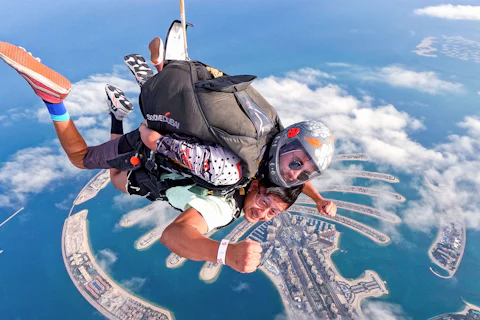
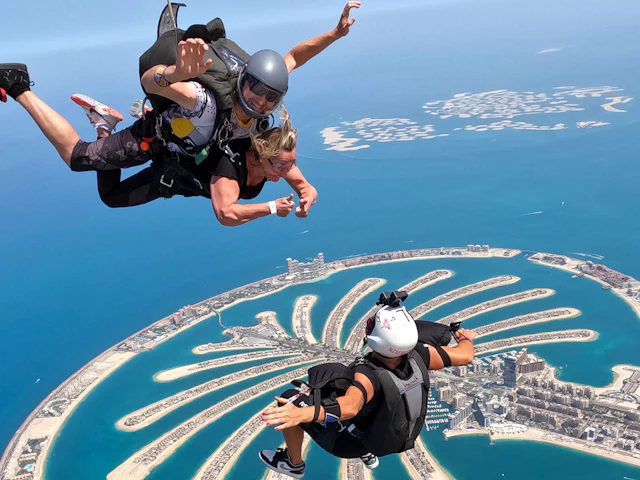
The same "up to 13,000 ft" applies at both dropzones. What differs is the view on the way down, covered on Palm vs Desert.
Freefall time and speed
The 60 seconds you see on ticket listings is a partner figure, not the operator's. Treat it as a round number at the top of the 30 to 60 second range that USPA gives for tandem jumps in general. The speed is better documented: Skydive Dubai uses 193 km/h (120 mph) on its booking and About pages and "approximately 200 kmph" in its FAQ, noting that body weight and position change it.
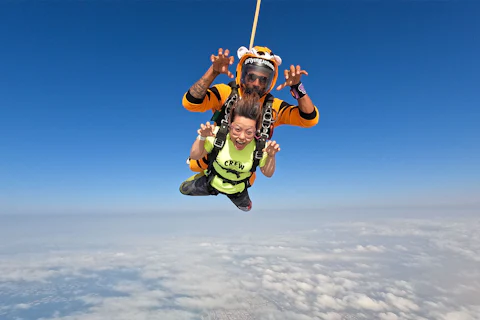
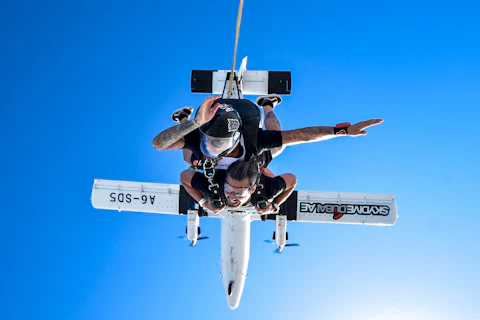
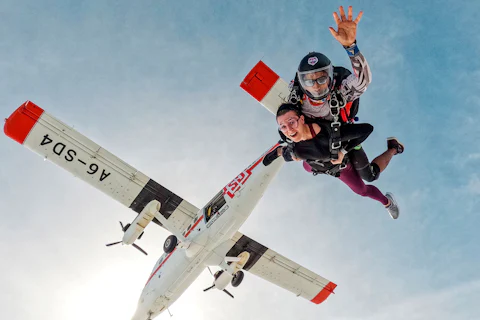
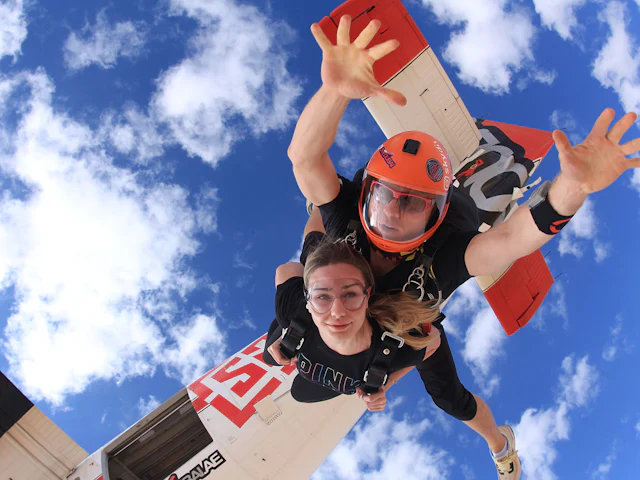
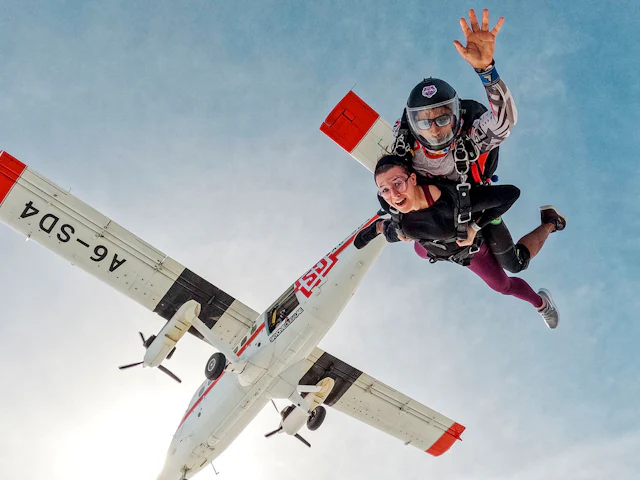
After the freefall, the instructor opens the parachute. Partners say this happens at about 6,000 ft; a GCAA accident report describing the club's procedures sets 5,000 ft above ground as the lowest allowed opening height for tandems. From there, partners describe up to 5 minutes under the canopy before you land on the same runway you took off from. Your camera flyer films the freefall; what you get afterwards is on photos and video.
10,000, 13,000 or 15,000 ft
People compare these heights because different dropzones in the world use them. The physics is simple: once you reach full speed, more altitude means more freefall. At about 193 km/h you fall roughly 54 metres a second, so each extra 1,000 ft (305 m) adds about 5 to 6 seconds. By that arithmetic, an exit at 10,000 ft would give around 15 to 20 seconds less freefall than 13,000 ft, and 15,000 ft around 10 to 12 seconds more, if the parachute opens at the same height. The first seconds after exit, while you speed up, make all such figures approximate. Skydive Dubai's tandem pages list no option above 13,000 ft.
Best time for clear views
Skydive Dubai notes that the UAE sees little cloud, and that poor visibility, rain and wind, especially at higher altitudes, are what delay jumps. Wind is the main factor. Visit Dubai calls October to April the city's outdoor season; a championship bulletin from Skydive Dubai and the Emirates Aerosport Federation gives average winds of 3 to 5 m/s for late November and early December. How often jumps are postponed is not published.
The operator gives no advice on the time of day; opening hours, the best months and what happens when weather cancels are on location and timings.
Where the 3 to 4 hours go
The jump itself is short: about 20 minutes of climb, one minute or less of freefall and a few minutes under the parachute. Most of your time is check-in, the weigh-in in clothes and shoes (see requirements), the briefing, the camera interview and waiting for your load, especially when wind puts operations on standby. The timeline above shows the order.